You sneeze, and a little urine escapes. You laugh at something your toddler says, and you feel it again. Urine leakage during pregnancy happens to a lot of women, and many of them assume it comes with the territory and there’s nothing to do about it.
I’m Dr. Anna Towne, a pelvic floor physical therapist and a mom of four. I’ve had this conversation with hundreds of patients, and I want to tell you what I tell them: leaking is common, but you don’t have to just wait for it to (maybe) go away.
There are exercises that help, and I’ll share them in this blog post.
What Is Urine Leakage During Pregnancy?
Urine leakage during pregnancy, also called urinary incontinence, is when urine escapes from your bladder without you meaning to let it. It can be a few drops or enough to soak through your underwear. It can happen once in a while or several times a day.
There are three types you might run into:
- Stress urinary incontinence is leaking that happens when pressure pushes down on your bladder, like when you cough, sneeze, laugh, jump, or lift your kids
- Urge urinary incontinence involves a sudden, strong urge to urinate that you can’t hold back long enough to make it to the bathroom, even when your bladder isn’t full
- Mixed incontinence includes both stress and urge incontinence together, which is what a lot of pregnant women deal with
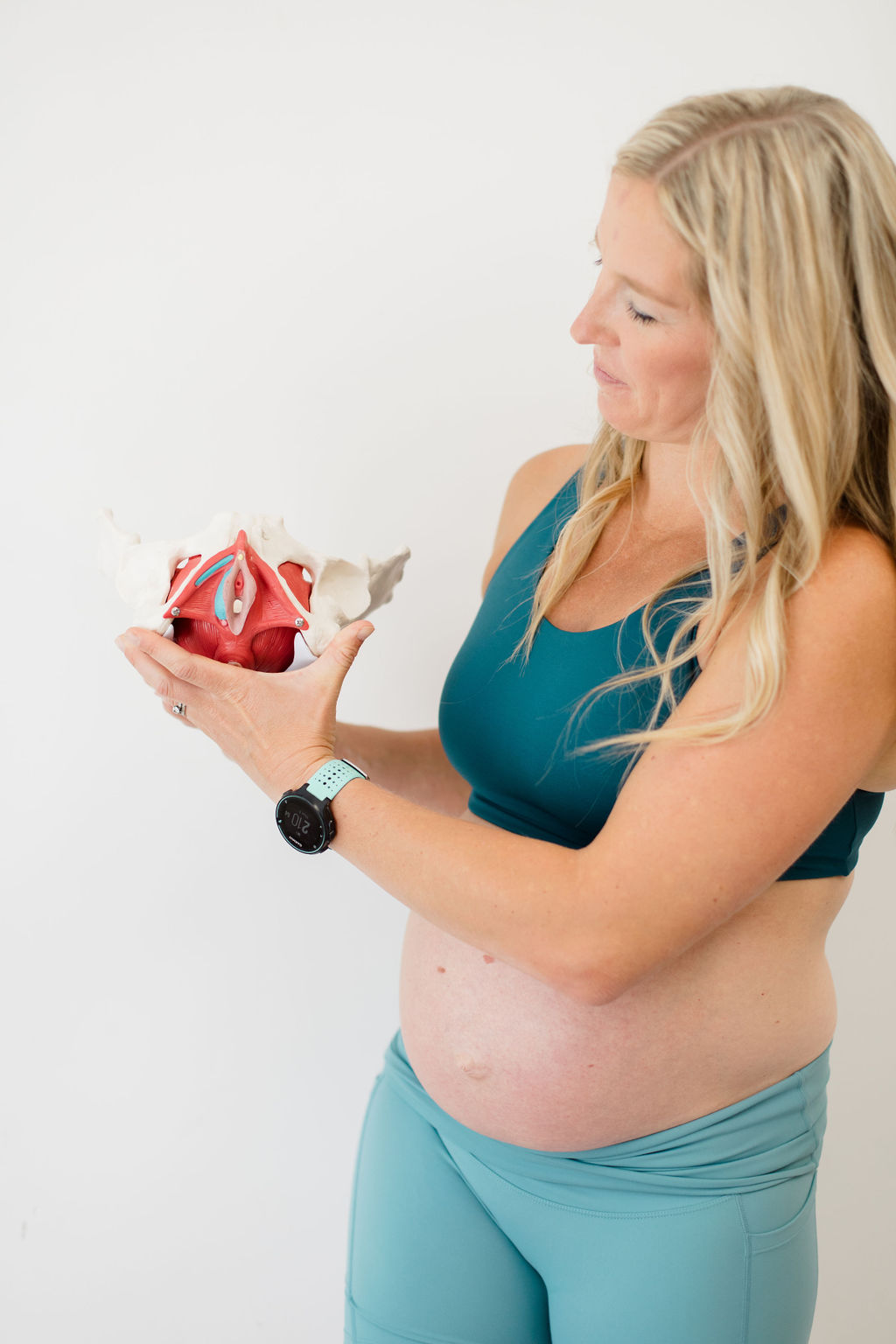
All types of urinary incontinence come back to your pelvic floor. These are the muscles that act as a sling across the bottom of your pelvis and wrap around your urethra, and they’re what keeps urine in.
If your pelvic floor muscles are too weak, too tight, or poorly coordinated with the rest of your core, they can’t do that job well. Pregnancy puts more pressure on your pelvic floor, which is why leaking shows up now even if it never has before.
Learn more about how to tell if your pelvic floor is tight or weak.
Urine Leakage During Pregnancy First Trimester
Most women expect leaking to show up later in pregnancy, once the baby is pressing more on everything, but it can start much earlier.
In the first trimester, your uterus is still low in your pelvis and sitting right on your bladder, which reduces how much urine you can hold.
But the bigger factor early on is often morning sickness. If you’re vomiting frequently, each episode sends a huge amount of pressure down onto your pelvic floor, and over time that repeated strain fatigues those muscles and leads to more leaking.
Your blood volume is also climbing, which means your kidneys are producing more urine than they used to, and you have to pee more often. On top of that, progesterone rises and relaxes smooth muscle throughout your body, including your bladder and urinary tract.
All of this can cause bladder control problems.
Urine Leakage During Pregnancy Second Trimester
Leaking that continues through the second trimester means that your pelvic floor isn’t managing pressure well, and the third trimester, when your baby will get even larger, won’t improve that.
If you haven’t yet, the second trimester is a great time to start pelvic floor physical therapy.
Your center of gravity is also shifting during these months. As laxity increases, your posture changes, and you carry more weight, a lot of the muscles that normally share the load, like your deep core, glutes, and hips, tend to check out and stop pulling their weight.
That leaves your pelvic floor to compensate, and a pelvic floor that’s working overtime tends to grip and tighten. A gripped pelvic floor can’t absorb the pressure of a cough or a sneeze, so that pressure goes to your bladder and you leak.
Urine Leakage During Pregnancy Third Trimester
This is when leaking peaks for most women because your baby is heaviest and your uterus is largest, so your bladder gets squeezed from above with every movement.
In addition, relaxin loosens the ligaments in your pelvis to prepare for delivery, which changes how your pelvis handles force. Your pelvic floor has been under load for months and, like any muscle, it fatigues.
Because of all of this, bladder control issues are very common in the third trimester, BUT they’re still preventable!
Learn more about why you pee when you cough.
What Causes Urine Leakage During Pregnancy?
Throughout all trimesters, leaking during pregnancy comes from a handful of things happening at the same time:
- Pregnancy hormones cause the muscles in your bladder and urinary tract to relax, which makes it harder to keep urine in
- Your growing uterus presses down on your bladder and reduces how much it can comfortably hold
- Increasing fluid volume during pregnancy leads to higher urine production, so your bladder fills faster than it used to
- Relaxin loosens the ligaments and connective tissue that support your pelvic organs
- Your pelvic floor muscles are under constant load and can fatigue, weaken, or grip too hard in response
- Your posture and breathing patterns change, which alters how pressure moves through your abdomen and down onto your pelvic floor
- Constipation, which is common in pregnancy, adds pressure to your bladder and strains your pelvic floor
Even though there are many reasons women experience bladder control issues during pregnancy, it doesn’t mean that there’s no way to treat it or make leaking less frequent.
Your pelvic muscles are muscles, and muscles can be trained, which is something that I teach in my program, Strong Expecting Mama.
How Common Is Urine Leakage When Pregnant?
It’s very common.
Research shows that between 40% and 50%+ of pregnant women have urinary incontinence symptoms. Leaking peaks in the third trimester, when your baby is the heaviest and putting the most pressure on your bladder, but it can show up at any point in your pregnancy.
What frustrates me as a pelvic floor physical therapist is that pregnant women often hear that leaking is normal or that it’ll resolve once they have their baby. That’s not always true.
In fact, research shows that more than 80% of women who have stress incontinence during pregnancy still have it after birth, and 16% of women are still leaking three months postpartum. In my practice, I see leaking postpartum a lot more often.
Why? Because pregnancy and birth are arguably the most intense physical experiences you’ll go through in your life, your pelvic floor muscles need rehab to treat urinary incontinence. But instead, our culture often normalizes leaking both during pregnancy and postpartum as part of “mom life.”
Is It Normal to Have Urine Leakage During Pregnancy?
No. Leaking is common during pregnancy, but it isn’t normal.
I found this thread on r/pregnant, and it explains this problem really well:
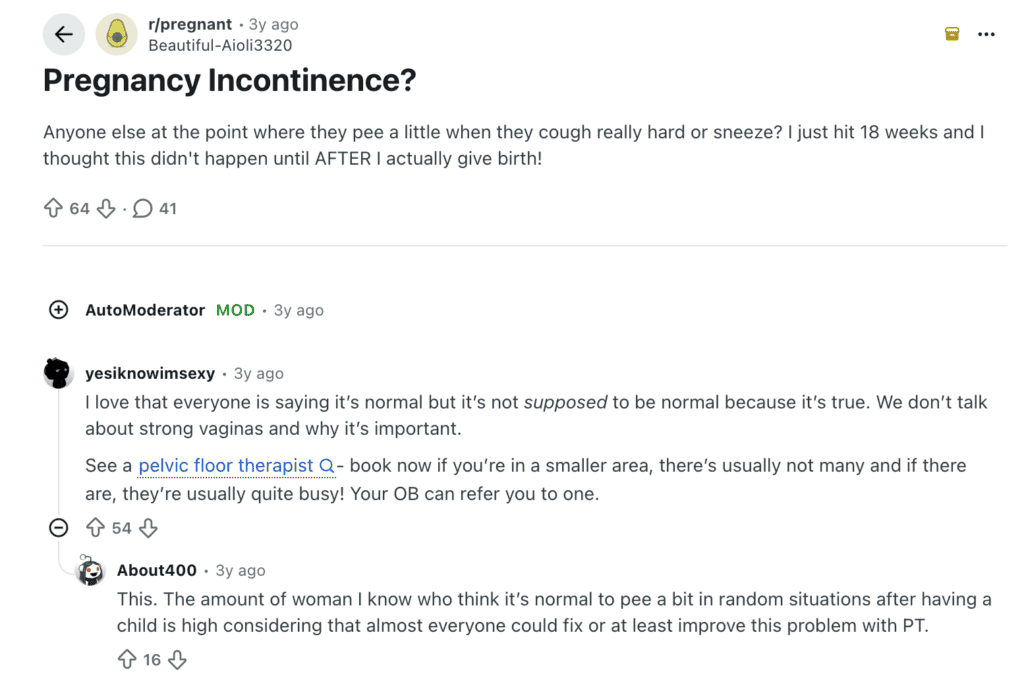
An 18-week mama is leaking when she coughs, and she’s shocked because she thought this only happened after birth. The top comment says what I’d say: everyone calls it normal, but it isn’t supposed to be, and we don’t talk about the pelvic floor enough when it comes to pregnancy incontinence.
As a pelvic floor physical therapist, I’ve spent years treating women who were told to either accept that urine leaks are part of their life now, or “do some Kegel exercises.” But you should not leak, no matter how far along you are, and there’s a lot more to pelvic floor muscle support than just one type of exercise (think: Kegels!).
If you’re looking for an easy place to start improving urinary leakage, try these pelvic floor exercises:

How to Control Urine Leakage During Pregnancy
There are a few different lifestyle changes that can reduce how often and how much you leak:
- Prevent constipation with fiber, water, and movement, since straining on the toilet puts pressure on your bladder and stresses your pelvic floor
- Manage your hydration by sipping steadily through the day instead of chugging large amounts at once, which fills your bladder and irritates it
- Try bladder training, which means going to the bathroom on a set schedule rather than at the first hint of an urge
- Cut back on caffeine and carbonated drinks, both of which irritate your bladder and make urges stronger
- Stop “just in case” peeing, because emptying your bladder before it’s full teaches it to signal earlier and earlier
- Avoid hovering over the toilet seat, which keeps your pelvic floor tense and prevents you from emptying fully
These are helpful and healthy habits to implement (both during and after pregnancy), but they don’t fix the reason you’re leaking.
Leaking during pregnancy is largely a pelvic floor problem, and pelvic floor problems respond to pelvic floor muscle training, which I teach in Strong Expecting Mama.
Does “pelvic floor physical therapy” mean Kegel exercises?
If you’ve brought up bladder incontinence with your medical provider in the past, you may have been told to do Kegels.
Kegels are one exercise, and they can be useful if a weak pelvic floor is your issue. But plenty of women who leak have the opposite problem: a pelvic floor that’s already holding too much tension and can’t relax enough to contract properly.
Proper pelvic floor training includes strength work, but it also includes learning to fully relax those muscles, coordinating them with your breath, and connecting them to your deep core and hips.
That’s what the exercises below are built around.
5 Exercises to Stop Leaking Urine During Pregnancy
These are five of the exercises I give my patients in the PT clinic when they come in with leaking. They work on all the pieces your pelvic floor needs: the ability to relax and lengthen, the ability to contract, and the coordination to do both at the right time.
You’ll need a small ball and a chair or couch for a few of them.
1. Puppy Pose
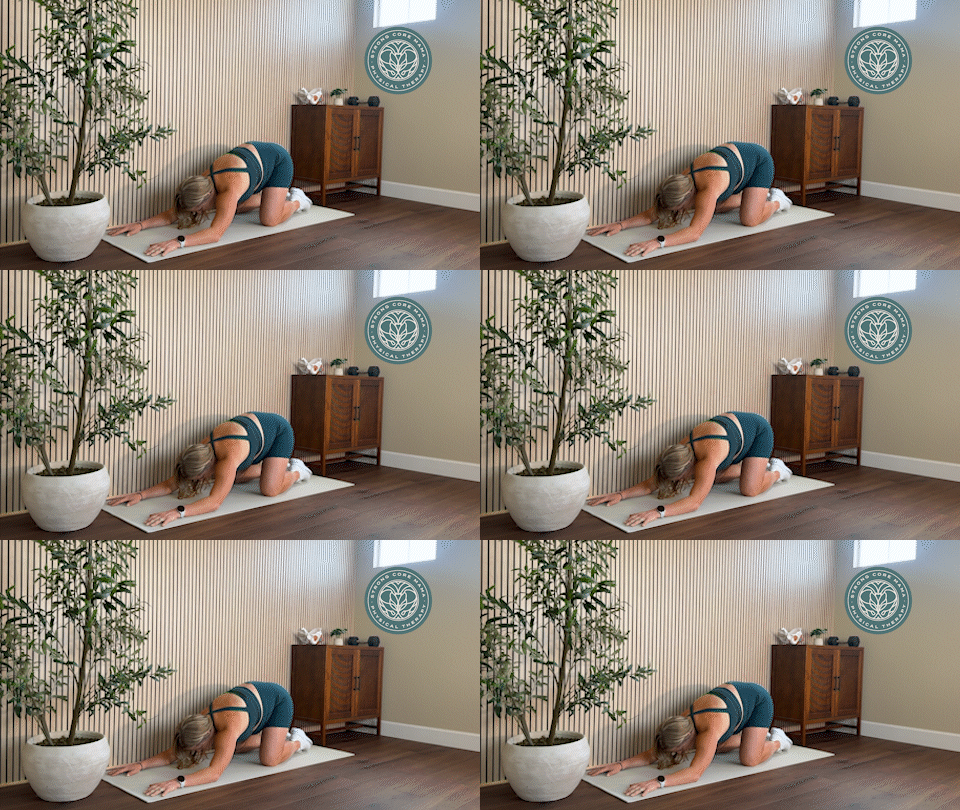
- Come onto your hands and knees, then walk your arms forward along the floor.
- Keep your hips lifted toward the ceiling and take your knees nice and wide to make room for your belly.
- Let your chest sink toward the floor until you feel a stretch through your spine and down into your low back and tailbone.
- Inhale through your nose and send the breath down into your tailbone and pelvic floor. Picture that area widening and softening as you fill up with air.
- Exhale through your mouth.
2. 90/90 Hip Lift with a Ball
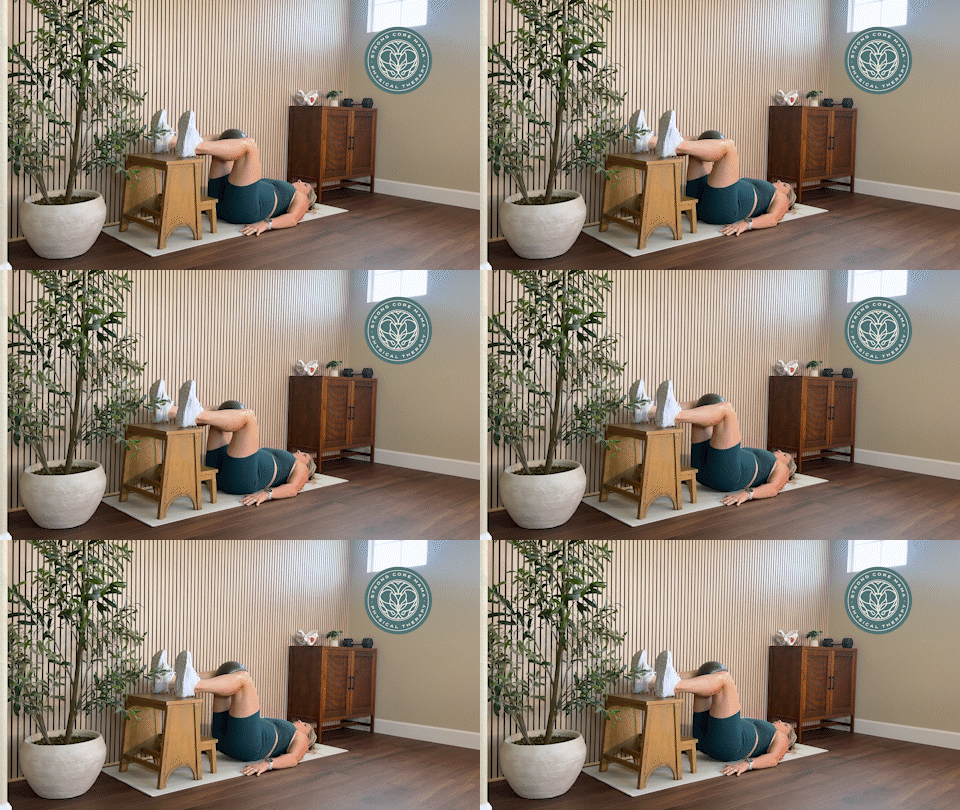
- Lie on your back with your feet up on a chair or couch, so your hips and knees are both bent at 90 degrees.
- Put a small ball between your knees.
- Inhale through your nose and let everything relax, including your pelvic floor.
- As you exhale, tilt your pelvis so the tip of your tailbone lifts slightly off the mat.
- At the same time, gently squeeze the ball between your knees. You should feel your inner thighs turn on and your pelvic floor lift up with them.
- Inhale and release back down.
- Do 10 reps. Relax on the inhale, contract on the exhale, every time.
3. Tall Kneeling Hinge with a Ball
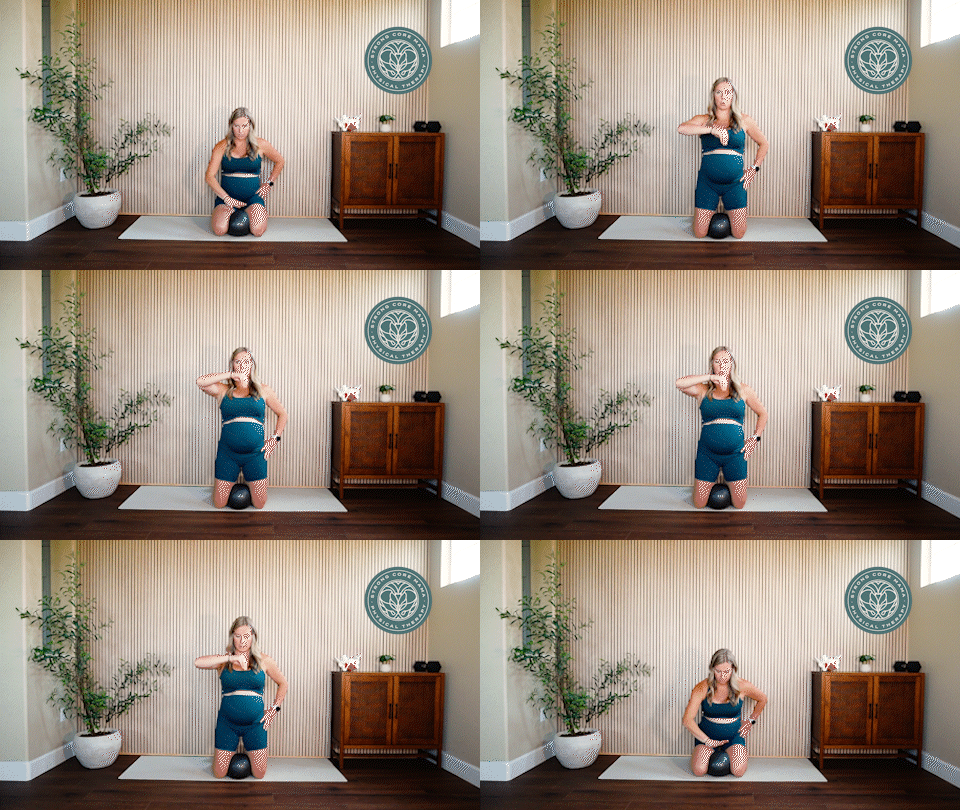
- Kneel down and put a small ball between your knees.
- Sit your tush back toward your heels so your glutes lengthen and inhale through your nose.
- As you exhale, lift your glutes off your heels, lift your pelvic floor, and contract your abdominals. Think about lifting from your pubic bone up.
- Gently squeeze the ball as you lift.
- Inhale and sit back down.
4. Hip Thrust with Adduction Squeeze
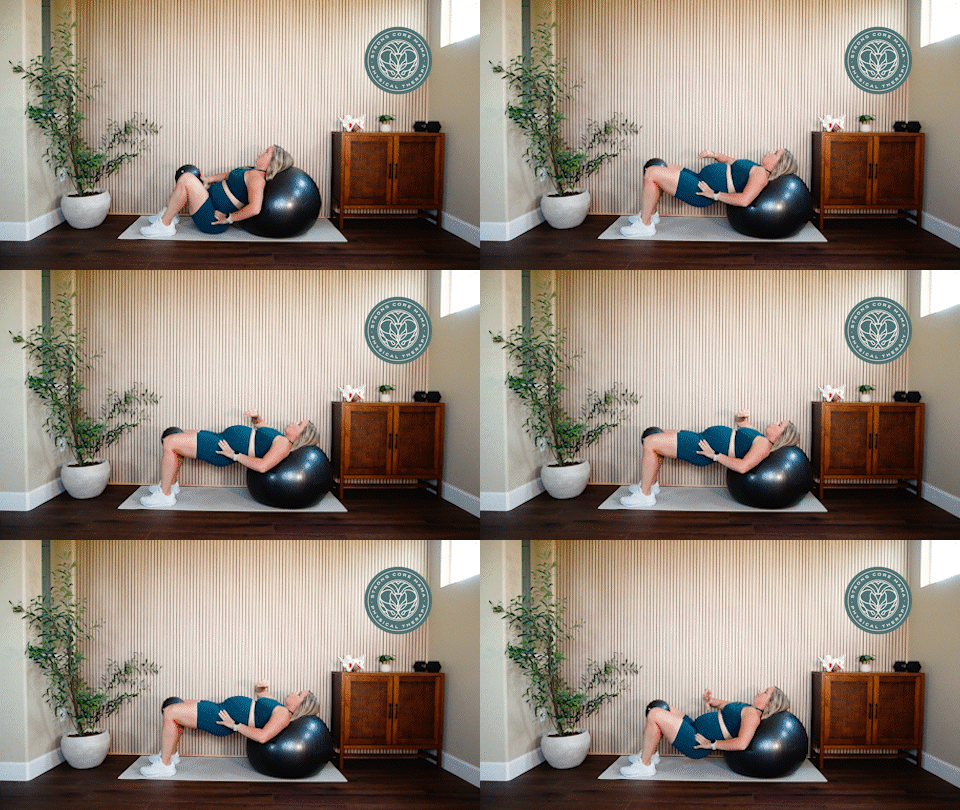
- Set up with your shoulders, head, and neck resting on an exercise ball (or an ottoman), with your feet flat on the floor and your bottom resting on the mat.
- Put a small ball between your knees.
- Inhale while your bottom is down and let your pelvic floor relax.
- As you exhale, push through your heels, squeeze your glutes, and lift your hips up off the mat.
- Contract your core as you lift, and gently squeeze the ball.
- Inhale and lower back down.
5. Quadruped to Bear Hold
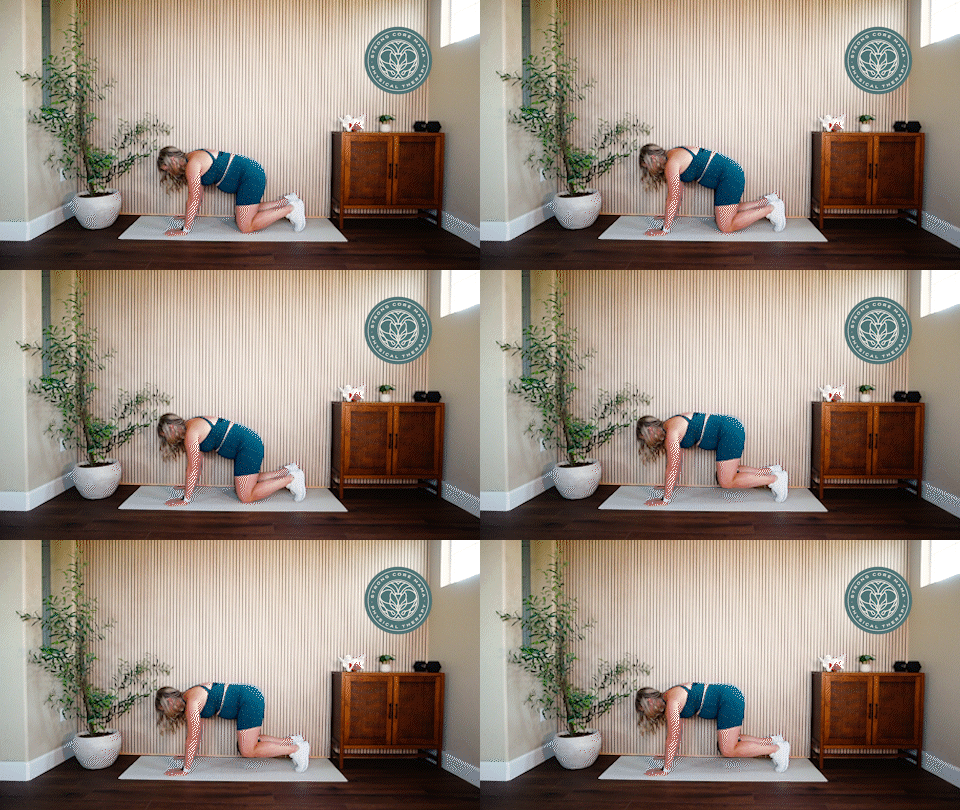
- Come onto your hands and knees with your hands right under your shoulders and your knees right under your hips.
- Put a small ball between your knees.
- Inhale and breathe into your back and side ribs, letting them expand.
- As you exhale, think about lifting your baby away from the floor and up toward your spine.
- Exhale as much air as you can, and as you do, gently squeeze the ball and engage your core and pelvic floor.
- Inhale and let everything relax back down.
FAQs
What should I do if I have constant urine leakage during pregnancy?
Leaking that happens all day, every day is worth getting looked at. Start by telling your OB or midwife what you’re experiencing and ask for a referral to a pelvic floor physical therapist. In the meantime, pay attention to when it happens, how much comes out, and what you were doing at the time.
Constant leaking can also be a sign that you’re leaking amniotic fluid instead of urine, so if you’re not sure what’s coming out, call your provider the same day.
What can I do about urine leakage while vomiting during pregnancy?
Vomiting sends a huge amount of pressure down onto your bladder, so leaking during morning sickness is common. Try to brace yourself before you throw up: sit down if you can, lean forward, and put a hand on a wall or a counter so your body isn’t taking the whole force through your pelvis.
For a long-term solution when you experience urinary incontinence when you vomit, pelvic floor physical therapy can help.
How much urine leakage is normal during pregnancy?
None. Leaking is common in pregnancy, but there’s no amount that’s supposed to happen. In fact, small leaks are usually the first sign that your pelvic floor isn’t managing pressure well. Urinary incontinence during pregnancy tends to get worse as your baby becomes bigger and heavier, so if you’re starting to experience it, it’s a sign to connect with a pelvic floor specialist and start doing exercises to prevent incontinence from getting worse in the future weeks as well as postpartum.
Am I leaking amniotic fluid or urine?
Urine is yellow and smells like urine. Amniotic fluid is usually clear or slightly pink-tinged, doesn’t smell, and keeps coming even after you empty your bladder. Urine leaks in response to something, like a cough or a sneeze, and then stops. Amniotic fluid leaks steadily and soaks through a pad. If you’re leaking and you can’t explain it, or you have any doubt at all, call your provider or head in to be checked.
Stop Incontinence During Pregnancy with Strong Expecting Mama
Leaking during pregnancy responds to pelvic floor physical therapy. With the right exercises, you can stop the leaks, feel more comfortable in your body now, and prevent urinary incontinence postpartum.
The problem is that getting to a pelvic floor PT in person is out of reach for many pregnant women. There may not be one in your area, and if there is, you may be looking at a long waitlist or a high cost.
I created my program, Strong Expecting Mama, to close that gap. It’s the same care I give my patients in the clinic, in a format you can use from home while you’re pregnant.

Inside the program, you get:
- Pelvic floor exercises that address leaking, pain, and other pregnancy symptoms
- Video lessons you can work through at your own pace, whenever it fits your day
- Education grounded in research, so you know what your body is doing and why
- Evidence-based ways to prepare for birth and labor
- The ability to ask me questions as you go
Join Strong Expecting Mama and stop urinary incontinence in pregnancy, postpartum, and motherhood so you can move, run, jump, and stay active without leaks!
