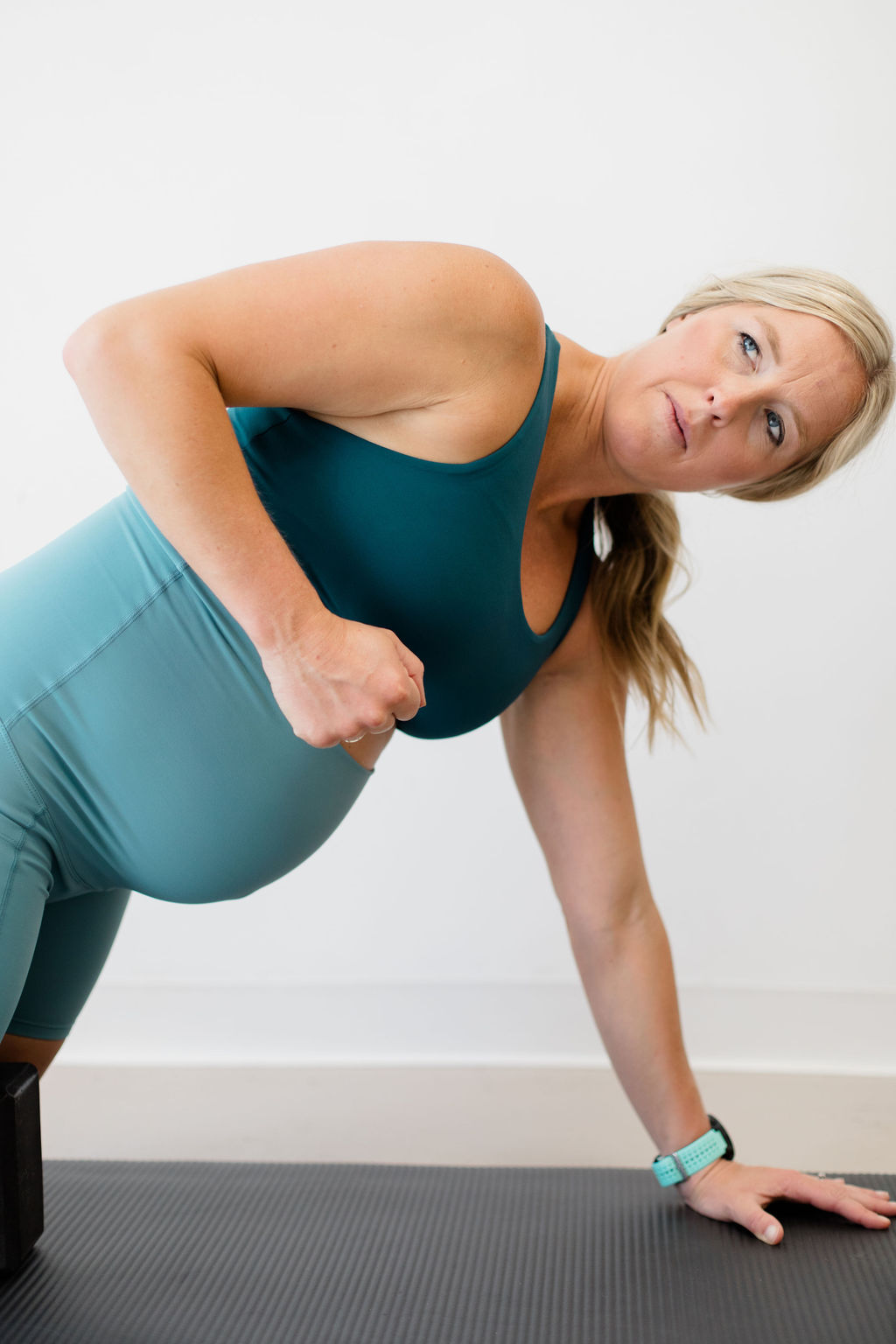
Can you do ab workouts while pregnant? As a pelvic floor physical therapist who focuses on pregnant women and moms, I hear this question a lot.
It’s no wonder. There’s so much conflicting advice out there! You may have heard that core exercises during pregnancy will make diastasis recti worse or even hurt your baby. At the same time, you may have seen pregnant women at your gym still doing ab workouts.
It’s confusing and can make you feel scared to do anything at all!
So, CAN you still do ab workouts while pregnant?!
The short answer is, yes, you can and should do ab work during pregnancy, but it needs to be appropriate for your body.
Core exercises during pregnancy aren’t only safe, but also beneficial. They help support your changing body, reduce uncomfortable symptoms like back pain, and prepare you for delivery and postpartum recovery. Here’s everything you need to know!
Your Core During Pregnancy: What Happens to Your Abdominal Muscles?
Your core goes through MAJOR changes during pregnancy.
As your uterus grows, your abdominal muscles stretch to make room for your baby. Your rectus abdominis muscles (the “six-pack” muscles that run down the front of your belly) separate along the midline to allow your belly to expand.
This separation is called diastasis recti, and it happens in all pregnancies (to some degree).
Your core also has to work harder as your pregnancy progresses. The extra weight of your growing baby, placenta, and amniotic fluid increases the pressure inside your abdomen. This increased intra-abdominal pressure affects how your core muscles function and puts more demand on your pelvic floor.
Your center of gravity also shifts forward as your belly grows, which changes how your core stabilizes your spine and pelvis.
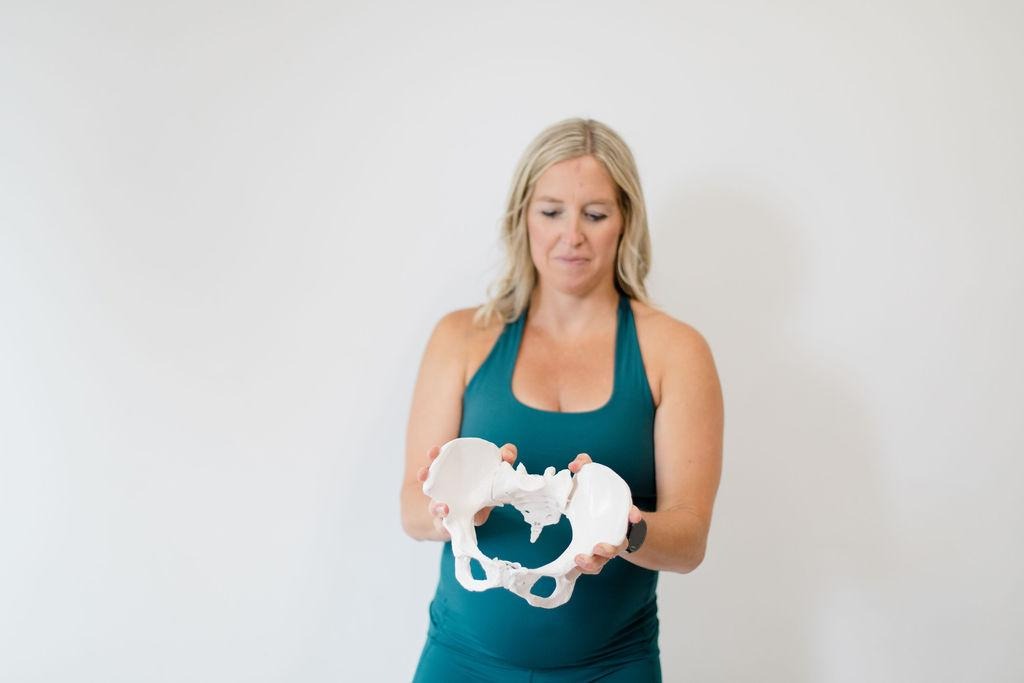
But these changes don’t mean your core stops working or that you should avoid using it! Actually, it’s the opposite.
Your core and pelvic floor work together as a pressure system.
When your abdominal muscles are strong and functioning well, they help manage intra-abdominal pressure and support your pelvic floor.
When they’re weak or not working properly, your pelvic floor has to work harder to compensate. That’s when you start experiencing symptoms like leaking, pelvic heaviness, or pressure.
This is why you should keep your core strong during pregnancy.
Can You Still Do Ab Workouts While Pregnant?
Yes, you can and should do ab workouts during pregnancy because keeping your core strong is essential for your body to handle the physical demands of pregnancy.
When your core is strong, you’re less likely to experience common pregnancy discomforts like back pain, sciatica, and pubic pain.
This is what you do in pelvic floor physical therapy.
You improve your pelvic floor and core strength to support your changing body during pregnancy and postpartum.
The American College of Obstetricians & Gynecologists recommends that pregnant women get at least 150 minutes of moderate exercise every week. Most pregnant women know they should stay active during pregnancy, and that’s important!
But what’s often missing from these recommendations is pelvic floor and core work, which is equally important during pregnancy.
Walking and swimming are great, but they don’t strengthen your core in the targeted way to manage increased intra-abdominal pressure and reduce pregnancy-related pain.
Learn more about when to start pelvic floor physical therapy during pregnancy.
What Are the Benefits of Core Exercises During Pregnancy?
Core exercises during pregnancy help your body handle the physical demands of carrying a baby. When your core muscles are strong and working properly, they reduce strain on your back and pelvis, which means less pain and discomfort as your pregnancy progresses.
Maintaining core strength means:
- Reduced back pain by supporting your spine as your center of gravity shifts forward.
- Better pelvic floor function because your core and pelvic floor work together to manage pressure.
- Less pelvic pain by stabilizing your pelvis and improving how your body distributes weight.
- Greater strength and endurance during pushing because strong core muscles help you generate force.
- Stronger foundation for postpartum recovery since you’re starting from a position of strength.
So, what safe core exercises can you do during pregnancy to help you feel more stable, pain-free, and confident in your body as it changes? I’m sharing my top 5 below!
Try These Safe Ab Exercises During Pregnancy!
Here are 5 core exercises that are not only safe but beneficial during pregnancy! These movements strengthen your deep core muscles and support your pelvic floor.
You can find more pregnancy-appropriate core exercises in my program Strong Expecting Mama!
Exercise 1: Belly Lift to Bear Hold
- Grab a small ball and place it between your knees so you can engage your inner thighs.
- Get into a tabletop position with your hands underneath your shoulders and knees underneath your hips.
- Inhale through your nose, then exhale as you hug the baby (think about pulling your baby up your spine, engaging your entire belly, not just pulling your belly button in!).
- As you exhale, lift both knees off the mat at the same time.
- Hold this position for a few seconds, then slowly lower your knees back down.
Exercise 2: Sidelying 1-2 Leg Lift
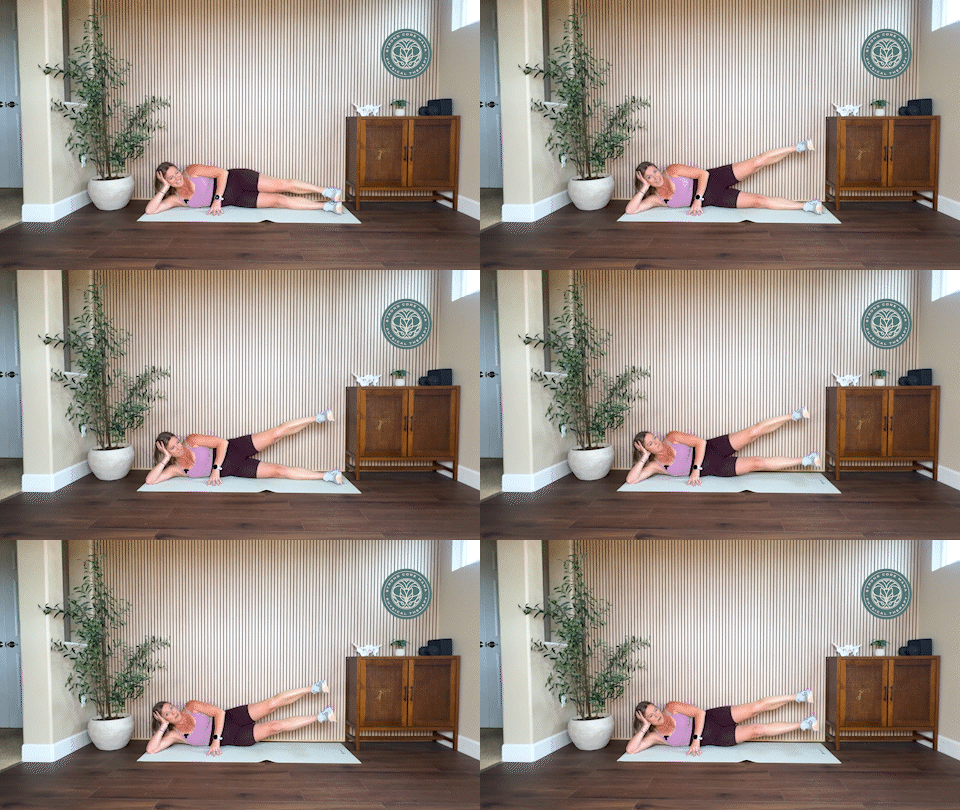
- Lie on your side and prop yourself up on your hand.
- Lengthen both legs out from your body, keeping them parallel to the floor.
- Lift your top leg, keeping your feet parallel to the floor.
- Lift your bottom leg toward your top leg, engaging your inner thigh and side abs.
- Hold this position briefly, then slowly lower both legs down.
Exercise 3: Half-Kneeling Woodchops
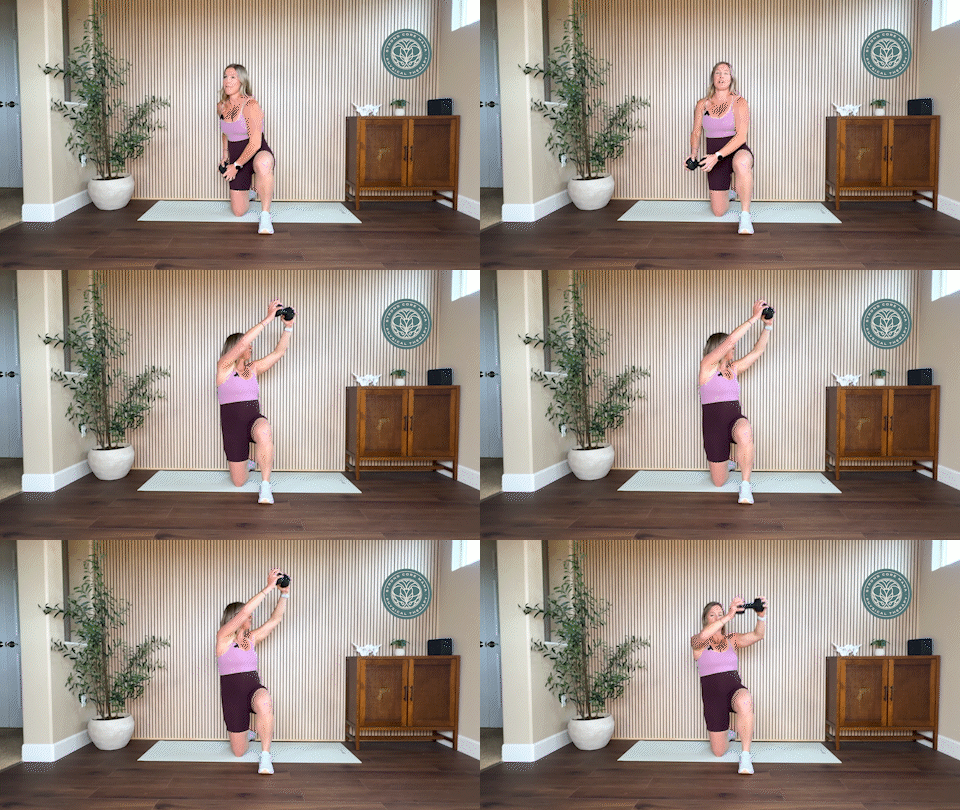
- Grab a dumbbell and get into a half-kneeling position with one knee underneath your hip and the other leg bent in front of you.
- Start with the dumbbell positioned at the side of the leg that’s behind you.
- Inhale, then exhale as you reach the dumbbell up and across your body toward your opposite shoulder.
- Hold briefly, engaging your deep core as you rotate.
- Slowly lower the dumbbell back down to the starting position.
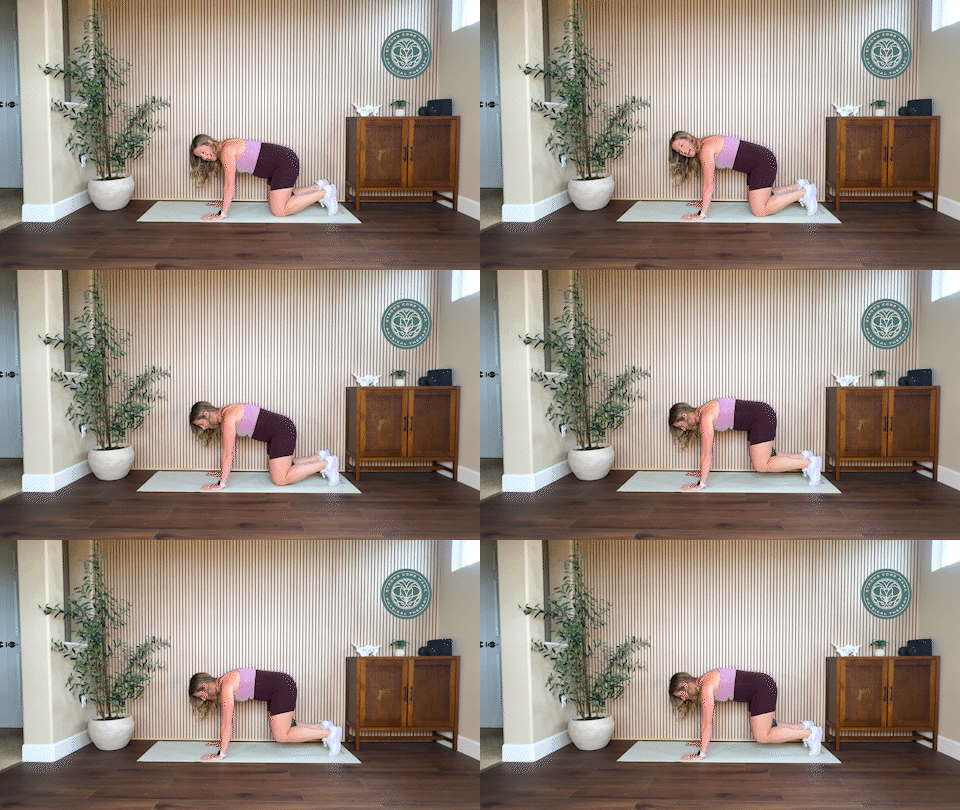
Exercise 4: Paraspinal Release with Leg Marches
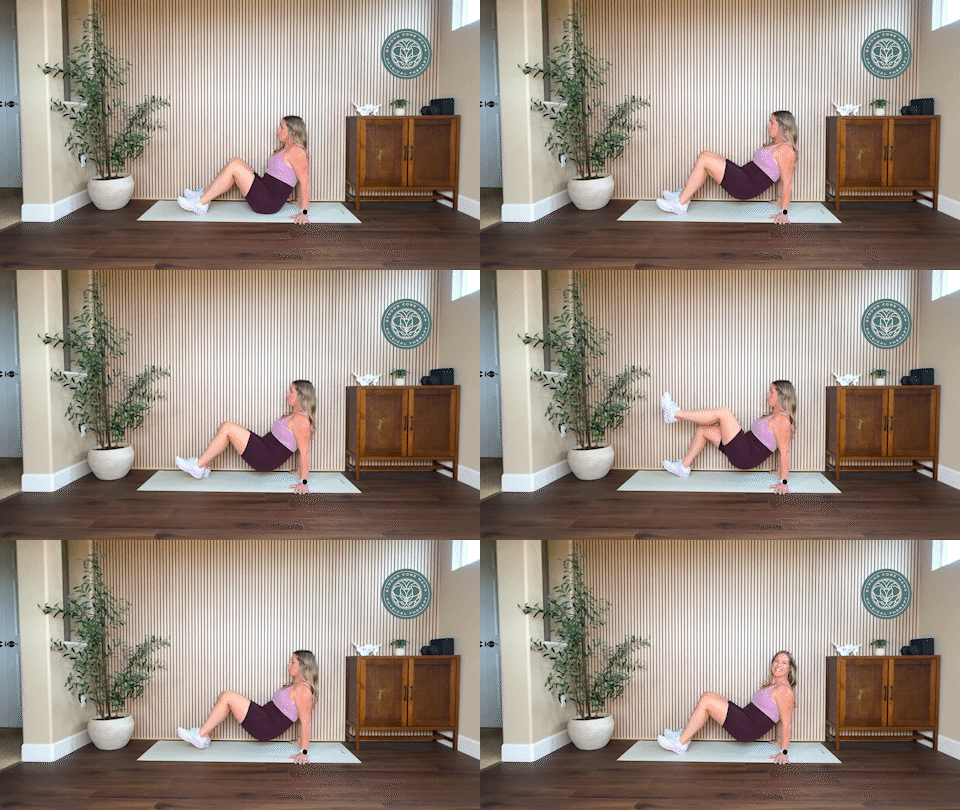
- Get into a hands-and-knees position with your hands underneath your shoulders.
- Dig your heels into the floor and make a scooping motion up with your pelvis and engaging your back thighs.
- Inhale through your nose, then exhale as you hug the baby and lift one knee up off the floor.
- Hold for a couple of seconds, then slowly lower that knee back down.
- Alternate legs, marching one knee up at a time.
Exercise 5: Side Plank Rotations
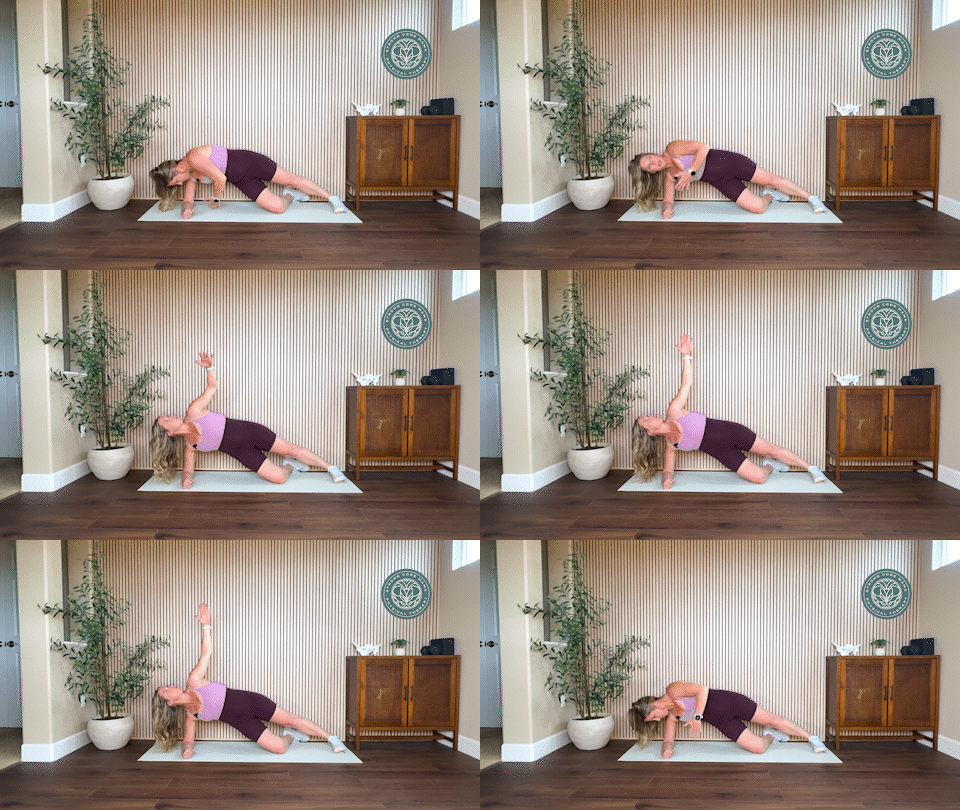
- Get into a side plank position on your elbow or straight arm (choose whichever feels best for you!).
- You can keep both legs straight or bend your bottom knee for more stability.
- Reach your top arm toward the ceiling.
- Inhale as you drop your hand down toward the mat, rotating your torso.
- Exhale as you lift your arm back up toward the ceiling.
Abdominal Exercises to Avoid During Pregnancy
You’ve probably heard that exercises like crunches, sit-ups, planks, and boat pose are “off-limits” during pregnancy. But the truth is more nuanced than that.
These exercises aren’t universally unsafe for all pregnant women throughout all of pregnancy.
Whether they work for your body depends on factors like your core strength, how your body is managing intra-abdominal pressure, what trimester you’re in, and how your individual pregnancy is progressing.
Instead of thinking in terms of “safe” or “unsafe” exercises, think about whether a movement is working well for YOUR body right now.
Signs that an exercise may not be working for you include:
- Visible hard coning or doming
- Pelvic pressure or heaviness
- Leaking
- Pain in your back, pelvis, or abdomen
When you notice these signs, you still don’t have to eliminate the exercise forever. But you’ll need to modify the strategy, adjust your breath, change the position, or find a variation that works better for your body at this stage of pregnancy.
FAQs
How long can you do ab workouts while pregnant?
You can do ab workouts throughout your entire pregnancy, from the first trimester through the third trimester. But the exercises need to be adapted as your body changes. As your belly grows, you may need to modify exercises that create too much intra-abdominal pressure for your body or change positions if lying flat on your back becomes uncomfortable.
You can keep strengthening your core safely from the first week through week 40+!
What ab workouts can you do while pregnant?
The best ab workouts during pregnancy are pelvic floor physical therapy exercises that engage your deep core muscles. These exercises teach your core and pelvic floor to work together to manage pressure, stabilize your spine and pelvis, and support your growing belly.
Movements like modified planks, bird dogs, dead bugs, and breathing exercises that engage your deep core can be beneficial during pregnancy. There are dozens of exercises like this in my program, Strong Expecting Mama!
Can I do planks during pregnancy?
It depends on how your body is managing intra-abdominal pressure. You may be able to do full planks throughout your pregnancy, or you may need to modify them.
Planks create a lot of intra-abdominal pressure, and if you notice doming or coning along the midline of your belly during a plank, it’s a sign that your core isn’t managing that pressure well right now. That doesn’t mean you have to stop doing planks. It just means that you need to modify the exercise with different breath and deep core activation strategies.
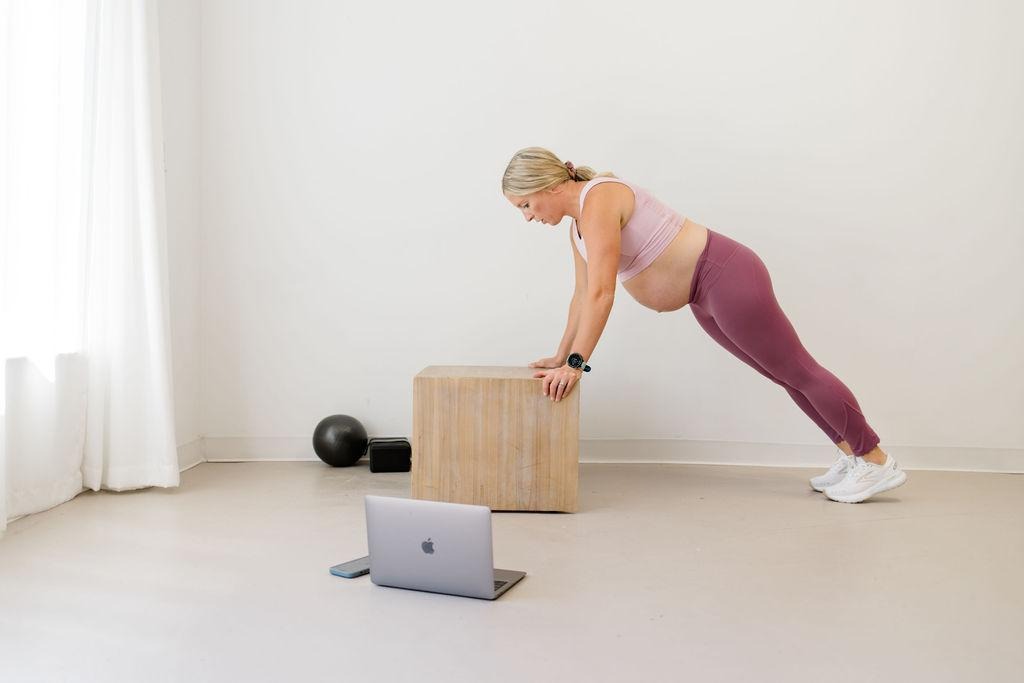
Modified planks, like planks on an incline with your hands elevated on a couch or wall, or planks on your knees, reduce the pressure but still strengthen your core.
Can I do crunches during pregnancy?
Yes, you can do crunches during pregnancy if your body is managing them well.
If you can perform crunches without pelvic floor heaviness during or after the movement, and you can manage any hard coning with breath strategy and deep core engagement, then crunches can still be part of your routine.
Crunches are actually a very functional movement! You need that curling pattern to get out of bed, pick things up from the floor, and move through daily life.
That said, they do put pressure on your rectus abdominis muscles, which are already separating to make room for your baby. For some women, this pressure can worsen diastasis recti or cause pelvic floor symptoms.
If crunches don’t feel like a good option for you right now, there are SO many alternatives you can choose from!
Will ab workouts make my diastasis recti worse?
No! Core exercises that engage your deep core muscles and teach pressure management can actually help support your abdominal wall and may reduce the severity of diastasis recti. One of the biggest indicators of diastasis recti postpartum is poor core strength!
Some separation is normal and unavoidable during pregnancy (your belly has to expand!), but strengthening your core the right way gives you the best chance of minimizing diastasis recti and recovering well postpartum.
Get Safe Pelvic Floor and Core Exercises in Strong Expecting Mama
Strong Expecting Mama is a pelvic floor physical therapy program for pregnancy during all trimesters.
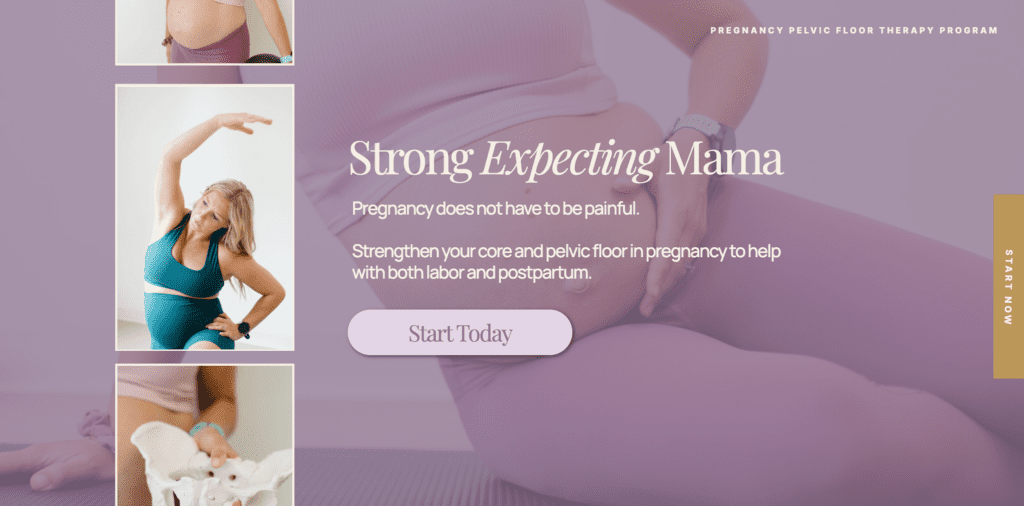
It gives you safe, pregnancy-appropriate core and pelvic floor exercises with in-depth education and access to me for questions as you work through the program. It’ll help you:
- Minimize pain and discomfort
- Prepare your core and pelvic floor for labor & delivery
- Build a strong foundation for your postpartum recovery
The program is fully online, so you can do everything at home on your own schedule instead of having to schedule PT appointments months in advance or drive there.
Plus, it’s a fraction of the cost of a single appointment!
Join Strong Expecting Mama and start strengthening your core the right way and with confidence during pregnancy!
