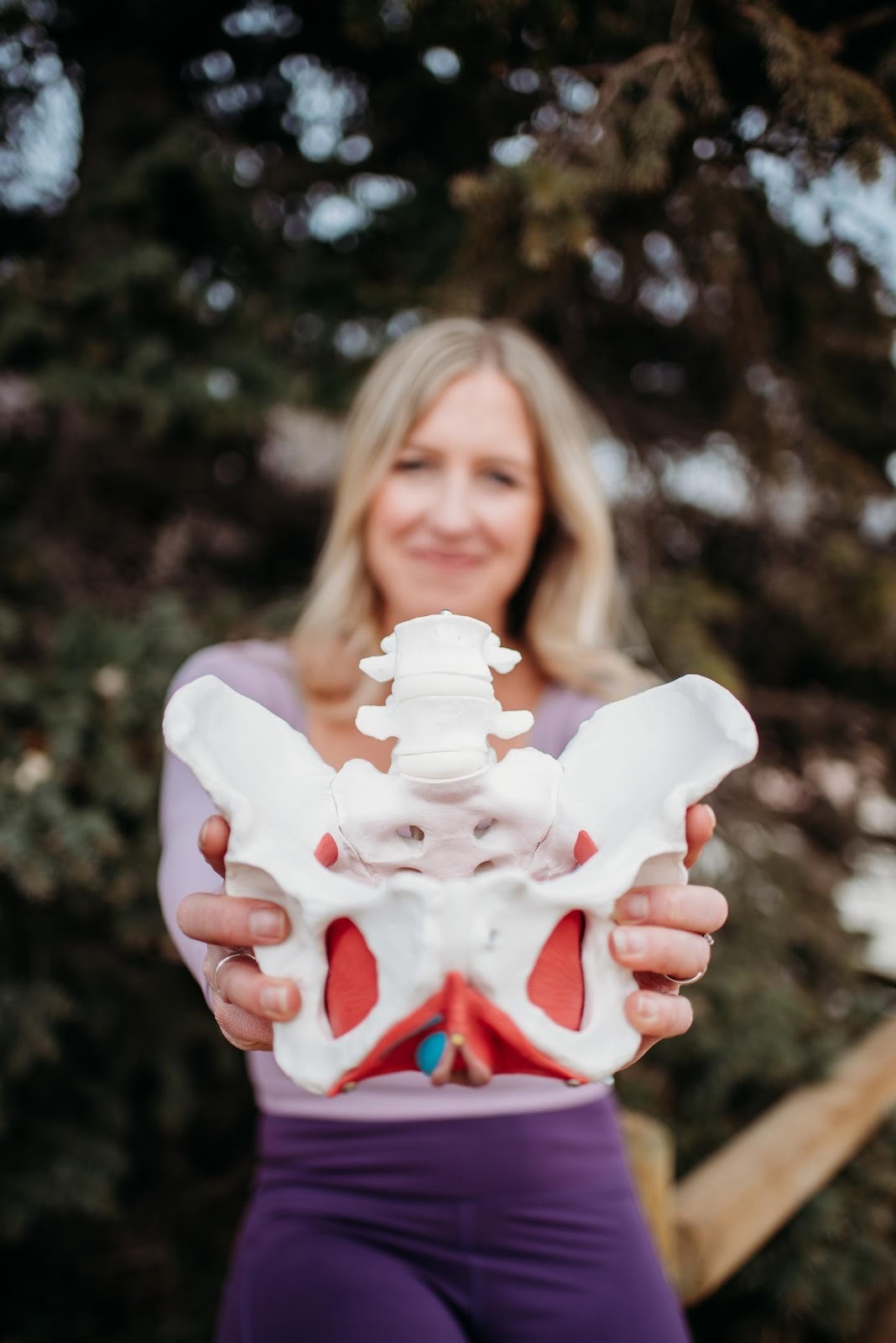
Pelvic floor therapy is a type of physical therapy that focuses on strengthening, relaxing, and retraining the muscles that support your bladder, bowel, and uterus. But what is pelvic floor therapy, really?
As a pelvic floor physical therapist, I often help women who are pregnant, postpartum, or years after having kids when they experience uncomfortable pelvic floor symptoms like urinary leaks, painful sex, or pelvic discomfort.
If you’re thinking about pelvic floor therapy, you probably want to know:
- What happens during a pelvic floor therapy session?
- What can it help with?
- Is it painful?
Here’s a crash course on everything you need to know about pelvic floor physical therapy, what to expect from sessions, and how it can help.
Note: Pelvic floor physical therapists work with people of all ages and genders, but I specialize in helping pregnant women and moms—whether you’re expecting, just had a baby, or your kids are grown. If that’s not you, there are still plenty of pelvic floor PTs out there who can help with your specific needs!
What Is the Pelvic Floor?
Your pelvic floor is a group of muscles that sit like a hammock at the base of your pelvis.
These muscles support your bladder, bowel, and uterus, and they play a role in everything from controlling when you pee to supporting your core during movement. Pelvic floor muscles help you to:
- Control your bladder and bowel function
- Support your pelvic organs (bladder, uterus, and rectum)
- Stabilize your core and spine when you move
- Contribute to sexual function and pleasure
- Support your baby during pregnancy
Your pelvic floor is part of your core system, working together with your deep abdominal muscles, diaphragm, and back muscles to keep you stable and strong.

When your pelvic floor is working properly, you don’t really think about it. But when these muscles become weak, overly tight, or uncoordinated, you might experience uncomfortable symptoms, such as urinary incontinence (leaking pee) and chronic pelvic pain.
In my practice, I often see pelvic floor issues develop during pregnancy and postpartum. Many of them persist for years or decades after having kids. This can lead to symptoms that many women think are just part of being a mom, such as peeing when you cough, but they’re not normal, and they are treatable.
I also see many women who had pelvic floor issues before pregnancy. For example, many female athletes have pelvic floor symptoms, but they never tell anyone. During pregnancy and postpartum, these symptoms often get worse. Again, this isn’t how it’s supposed to be!
What Is Pelvic Floor Physical Therapy?
Pelvic floor physical therapy is a type of PT that addresses dysfunction in your pelvic floor muscles. It’s done by a pelvic floor physical therapist with advanced training—a doctorate-level degree for PT, plus continuing education to become trained in the pelvic floor.
The purpose of pelvic floor PT is to restore proper function to these muscles through targeted exercises, manual therapy techniques, and education on how you move + breathe.
Pelvic floor therapy is highly effective and can help with:
- Painful sex
- Urinary leaks when you cough, laugh, sneeze, or exercise
- Overactive bladder
- Lower back pain
- Hip pain
- Pelvic pain, pressure, or heaviness
- Constipation, difficulty controlling gas, or fecal incontinence
- Diastasis recti (abdominal separation)
- Recovery after vaginal delivery (including tearing)
- Recovery after C-section
- C-section shelf
- Pregnancy-related pain, such as sciatica
- Rib flare (wider ribs)
- Pelvic organ prolapse
- Tailbone pain
Seeing a PT can help with pelvic floor problems that have been an issue for years. For example, I often see patients who want to fix diastasis recti years later, such as 5 or 10 years after having their last baby.
If you’re a mom, you don’t have to wait until you’re done having kids to do pelvic floor rehab, either. It’s something you can (and should!) do in between and during pregnancies.
(This is something I’m personally HUGE on. If you rehab after each pregnancy, you’ll have less pain and symptoms in subsequent pregnancies and easier postpartum recoveries!)
Pelvic floor physical therapy is for women in ALL seasons of life—during pregnancy, postpartum, and as your kids get older!
Important note: While I focus on moms and pregnant women, pelvic floor therapy isn’t just for motherhood. Pelvic floor PTs also work with women experiencing symptoms unrelated to pregnancy or childbirth, as well as men with pelvic floor dysfunction.
What Is the Purpose of Pelvic Floor Therapy?
The goal of pelvic floor therapy is to help you feel strong, confident, and comfortable in your body so you can live your life without limitations.
A survey from Aeroflow Urology found that 85% of mothers experience bladder leaks after childbirth, with many dealing with it daily or weekly.
Pelvic floor PT helps you address these types of symptoms so you can chase after your kids at the playground, jump on the trampoline with them, pick them up without hesitation, and exercise without worrying about leaks or wearing black leggings to hide accidents.
So many of these symptoms get normalized as just part of motherhood, but avoiding activities you love or living with chronic pain or discomfort is not normal.
Pelvic floor therapy rebuilds your strength and allows you to enjoy being active. Learn more about returning to high-impact activity postpartum, such as running.

How Can You Tell If You Need Pelvic Floor Therapy?
If you’re dealing with any physical symptoms related to your pelvic floor, bladder, bowel, or core function, pelvic floor therapy can help. It’s especially helpful:
- During pregnancy: When you’re experiencing pelvic pain, hip discomfort, pressure, back pain, leaking when you cough or sneeze, or preparing for vaginal delivery (or VBAC).
- In the postpartum period: When you’re struggling with bladder function (especially leaking), bowel movements, pain during sex, a feeling of heaviness in your vagina, diastasis recti, hip pain, or back pain.
- As you return to activity and exercise: When you leak during jumping, running, or lifting, or have pain or feelings of heaviness that won’t resolve.
- Years after having kids: When symptoms like urinary leaks, painful intercourse, or pelvic pressure continue to interfere with your daily life.
- As you age: When hormonal changes make existing symptoms worse or new issues like prolapse or increased urgency start to develop, especially during perimenopause.
The University of Iowa (my alma mater!) studied over 25,000 adult women at primary care clinics and found that at least 32% had been diagnosed with pelvic floor dysfunction. Many of these women weren’t even seeking care for pelvic floor issues when they were diagnosed!
Researchers also believe that the actual number is higher. Many women underreport pelvic floor symptoms because they’re embarrassed, don’t know that there are treatment options available, or simply believe that their symptoms are normal.
Pelvic floor disorders are incredibly common, but, unfortunately, many women brush off these issues as annoyances that they just have to live with.
If you’re experiencing symptoms but don’t know why, many women assume that it’s because their pelvic floor is weak and they should just do kegels, but that’s often not true! In fact, pelvic floor tightness can often cause the same or similar symptoms.
Learn how to tell if your pelvic floor is tight or weak.
What Do They Do in Pelvic Floor Therapy?
So, what is pelvic floor therapy like? You’ll usually start with an initial assessment where your therapist evaluates your symptoms, pelvic floor health, and general history.
From there, you’ll follow a treatment plan that’ll likely consist of pelvic floor exercises and other techniques to either strengthen weak pelvic floor muscles or relax overly tight ones.
In my practice, I always give exercises that also involve other parts of the body, such as the core and hips. Your pelvic floor is an interconnected part of your body, and to effectively get rid of symptoms, we have to treat the whole system!
First Visit
During your first pelvic floor therapy appointment, your therapist will ask detailed questions about your symptoms, medical history, pregnancy and birth experiences, and daily activities.
They’ll watch how you move, assess your posture and breathing patterns, and evaluate your core and pelvic floor strength.
The PT should also do a physical exam to check your pelvic muscles. This usually involves gently inserting a gloved finger into your vagina to feel how these muscles contract and relax. The pelvic floor PT will use lubricant to make sure that it’s not painful, but it can feel a little uncomfortable or strange.
Your therapist will always explain what they’re doing and get your consent first.
Treatment Plan
Your treatment plan will include exercises and techniques to strengthen pelvic floor muscles, learn to relax overly tight ones, or improve coordination. It should also involve other parts of your body, such as your core, hips, and glutes.
Sessions typically happen once a week at first and then are spaced out as you improve. Most women see progress within 6-8 weeks, but the full timeline depends on your symptoms, pelvic health, and how consistently you’re doing your exercises.
Your pelvic floor PT should give you exercises that you’ll do at home, and in-person sessions are more for getting guidance, feedback, and checking in on your progress.
What If I Can’t Go See a Pelvic Floor Therapist in Person? Can You Do Pelvic Floor Therapy Online?
Yes, and it works REALLY well for many women.
Virtual pelvic floor therapy gives you access to expert guidance without the logistical headaches of in-person appointments. You won’t have to drive to a clinic, arrange childcare for your kids, and wait to see your PT. Plus, it’s a lot more affordable!
However, it’s VERY important to figure out who you’re getting your guidance from. Is it an actual pelvic floor PT with an advanced degree and relevant experience?
The Internet makes information more accessible than ever, but not all of it is accurate or safe. Generic advice from unqualified sources can lead to ineffective exercises, worsening symptoms, or even injury.
👉Always choose programs created by a licensed pelvic floor physical therapist with the expertise to guide you safely.
As a pelvic floor physical therapist, I spent 12+ years treating patients in the clinic, and I kept hearing the same barriers over and over:
- Women couldn’t get childcare to make appointments
- They couldn’t afford ongoing sessions
- Wait times to see a provider stretched months
They needed help, but in-person PT just wasn’t accessible.
So I created evidence-based programs that include every single exercise and piece of education I teach my in-person patients.
You get the same expert guidance, just on your schedule, from home, at a fraction of the cost:
- Strong Expecting Mama: Pregnancy classes to help you prevent, reduce, and manage pain as well as prepare for delivery and postpartum recovery.
- Strong Healing Mama: Safe exercises to promote healing during the first 2-6 weeks postpartum.
- Strong Core Mama: Pelvic floor exercises for ALL seasons of motherhood, whether you had a vaginal delivery, a C-section, or your kids are older.
- Strong C-Section Mama: A dedicated C-section track to strengthen your core and heal your scar.
- Strong Running Mama: Safe return-to-running rehab classes for active moms who want to get back to high-impact fitness postpartum.
Each program includes evidence-based pelvic floor exercises, guidance on physical therapy techniques, and a TON of education!
You’ll have access to video lessons you can follow at your own pace, plus I’m there to answer your questions as you progress through each class!
I also offer 1:1 virtual consultations if you want a personalized session to discuss your symptoms and figure out the root cause so you can get back to the activities that you love.
What to Expect at Your First Pelvic Floor Therapy Session
Your first session will focus on understanding your symptoms and creating your treatment plan. Your therapist will spend most of the first session listening to your concerns and asking questions about what you’re experiencing.
You may also move through some basic assessments and a physical examination.
Here are a few tips:
- Wear comfortable clothing that you can move in easily
- Bring a list of questions so you don’t forget anything you want to discuss
- Plan for the session to take about an hour so you’re not rushing
After the first session, you’ll start seeing your pelvic floor PT regularly, typically once a week.
FAQs
How long does a session of pelvic floor therapy take?
A typical pelvic floor physical therapy session lasts about 45 minutes to an hour, but it can vary greatly depending on whether it’s an insurance-based clinic or not. Make sure that you’re actually seeing the physical therapist 1:1 and aren’t being passed off to an aid, and that the provider isn’t treating multiple patients at once. Between sessions, your therapist should give you exercises to practice at home as part of your treatment plan, and it’s very important to stay consistent with them because this is where real change happens!
If you’re doing pelvic floor therapy through an online program, you can work through the exercises at your own pace on your own schedule, which is often a lot more convenient.
What do you wear to pelvic floor physical therapy?
Wear comfortable clothing that’s easy to move in, like athletic leggings or shorts with a t-shirt or tank top. You’ll likely be doing physical therapy exercises during your appointment, so you want to be able to move freely. If your session includes an internal exam, you’ll typically undress from the waist down and be provided with a drape for privacy, similar to a gynecology appointment.
Do they finger you during pelvic floor therapy?
For in-person physical therapy, an internal pelvic exam should be part of your assessment because it’s the only way to truly know what your pelvic floor is doing. If your therapist recommends an internal exam and you give consent, they’ll gently insert a gloved, lubricated finger into your vagina to feel how your pelvic floor muscles contract and relax. This helps them assess muscle strength, tension, coordination, and identify any trigger points or areas of tightness.
Your therapist will always explain what they’re doing, get your consent before proceeding, and you can decline at any time. In my experience, it’s not uncommon for patients to decline, and your PT should respect that and suggest other evaluation methods.
Do you need to shave for pelvic floor physical therapy?
No, you don’t need to shave or do any kind of grooming before pelvic floor therapy. Your therapist is a medical professional who’s focused entirely on your pelvic floor function and not your appearance. They’ve seen it all and couldn’t care less about body hair. Show up however you’re most comfortable! Your therapist won’t be paying attention to ANYTHING but your pelvic floor function.
Is pelvic floor therapy painful?
No, pelvic floor therapy shouldn’t be painful. If your session involves an internal exam, you might feel some discomfort or tenderness when your therapist is working on tight muscles or trigger points, similar to the sensation you’d get during a deep tissue massage, but it shouldn’t hurt. If you do experience pain during any part of your session, tell your therapist right away.

Meet Dr. Anna Towne, Pelvic Floor Physical Therapist
As a pelvic floor physical therapist, I help moms feel strong, confident, and pain-free in their bodies during pregnancy, postpartum, and beyond.
But over my 12+ years at the clinic, I saw that in-person pelvic floor PT wasn’t accessible to many women because of the cost, long waitlists, the lack of childcare, or simply not having a qualified pelvic floor therapist nearby.
So, I created Strong Core Mama Programs to help more women rebuild their core and pelvic floor strength through evidence-based exercises and education.
My programs are designed to fit into your life as a busy mom, with step-by-step guidance you can follow from home. Learn more about:
- Strong Expecting Mama: For all pregnancy trimesters
- Strong Healing Mama: For 2-6 weeks postpartum
- Strong Core Mama: For 6+ weeks postpartum
- Strong C-Section Mama: For 6+ weeks postpartum
- Strong Running Mama: For 12+ weeks postpartum
All programs are online, each class takes just 15-20 minutes, and you’ll be able to ask me questions as you move through each step!
