Pregnancy is such an exciting time, but rib pain and sleepless nights can make it hard to enjoy. You probably feel exhausted at night, but when you finally get into bed, the sharp, stabbing pain under your ribs can keep you awake for hours.
If you’re wondering how to sleep with rib pain during pregnancy, the solution isn’t just about what you do at night. It’s much more about what you do throughout the day.
In this post, I’ll share exercises and practical tips that address the root cause of pregnancy rib pain so you can sleep better, stay active, and feel strong throughout your pregnancy.
What Causes Pregnancy Rib Pain?
Pregnancy rib pain typically feels like a sharp, stabbing sensation under your ribs. It can sometimes develop only on one side, but it’s also possible to feel it on both sides of your body.
I’ve heard some expecting moms in the physical therapy clinic describe it as a constant ache, but many women feel it more intensely when they sit for too long or try to lie down at night.
This sharp pain often develops in your second and third trimesters, but sometimes it can start earlier in your pregnancy journey.
There are a few different reasons for rib pain during pregnancy:
- Your ribs are changing position: As your baby grows, your rib cage flares outward to make room. This is an amazing physiological adaptation, but it changes how your ribs move and function.
- You lose normal breathing mechanics: When your ribs flare, you often stop breathing into your side and back rib cage. Instead, you start breathing only into your upper body/chest, which creates tension and pain.
- Pregnancy hormones relax your ligaments: Relaxin and other hormones loosen the joints and connective tissue around your ribs, which can make them feel unstable and achy.
- Lack of movement: For a long time, women were told not to rotate during pregnancy. We’ve since learned this isn’t true, and that when you don’t move your spine, you often end up with both back pain and rib pain.
Rib pain during pregnancy is common, but that doesn’t mean you should just accept it. It can be debilitating and seriously interfere with your sleep, which you desperately need right now!
I recently saw this post on Reddit:
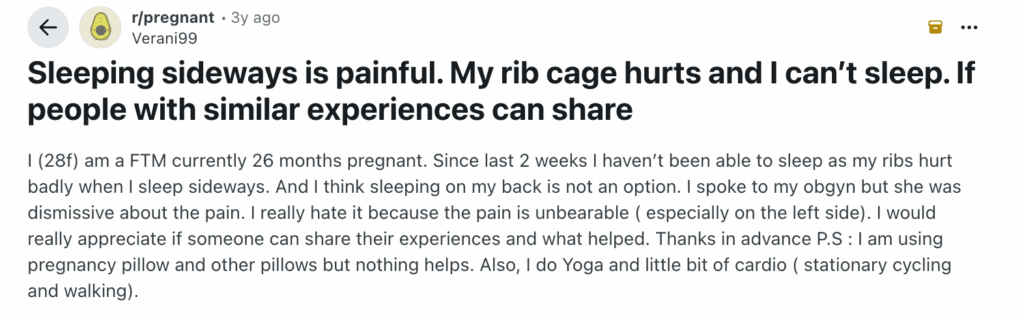
This mom is dealing with unbearable rib pain that’s preventing her from sleeping. She’s doing yoga and using pillows for support—all the “right” things that the Internet is suggesting—but they’re not helping.
This is because prenatal yoga often is NOT the answer because stretching just creates more instability when your ribs are already flared.
It doesn’t address the root cause of the problem. It might help temporarily, but the pain will often creep back in, for example, when lying down at night.
What your body needs is strength and stability in every muscle group that attaches to your pelvis.
Building strength in your deep core, glutes, hamstrings, and other parts of the body helps your rib muscles work properly again, which reduces pain both during the day and at night.
Managing rib pain is something I often help pregnant women do as a pelvic floor physical therapist.
How to Sleep with Rib Pain During Pregnancy
Let’s start with a few practical tips that can help relieve rib pain at night. These won’t fix the root cause, but they can give you some relief as short-term solutions while you work on building strength.
1. Sleep on your left side
Left-side sleeping takes pressure off your inferior vena cava (the large vein that carries blood from your lower body back to your heart) and improves blood flow to your baby.
This sleeping position tends to reduce rib pain because it prevents your uterus from pushing as heavily against your ribs on the right side.
Right-side sleeping is fine too if left-side sleeping doesn’t feel like the most comfortable sleeping position! Some women also find that switching sides throughout the night helps prevent one side from getting too sore and results in a more restful night’s sleep.
Personally, I used to be afraid of sleeping on my right side because I knew that left was supposed to be better, but I’d wake up during the night and feel like I had to switch, and everything was totally fine. I recommend my clients to switch as much as needed!
2. Put a pillow between your knees and arms
A pillow between your knees keeps your hips aligned and reduces strain on your lower back and pelvis. This alignment can indirectly help with rib pain because it keeps your body better supported.
Placing a pillow between your arms (or hugging a body pillow) keeps your shoulders from collapsing forward and gives your rib cage more space to expand. This can help reduce muscle tension and rib pressure.
You might also find it helpful to put a pillow underneath your bump for extra support. This takes some weight off your ribs and can make breathing easier.
Overall, pillows can be super helpful!
3. Try a maternity support band
A maternity support band provides gentle compression and support for your belly, which can help stabilize your rib cage and reduce flaring. In my practice as a PT, many women find that wearing one during the day makes their ribs feel less sore at night.
If it helps make your ribs hurt less, you can also wear a pregnancy support band to sleep.
Here are my favorite maternity support garments that I recommend as a pelvic floor PT!
How to Ease Rib Pain During Pregnancy Long-Term
The most important things for reducing rib pain are your breath and your posture. How you move and breathe throughout the day influences how you feel at bedtime.
I know this might sound too simple or boring, but these things matter more than you know! I also used to think that things like breathing were silly and didn’t matter before my first pregnancy. So, trust me on this one!
Diaphragmatic breathing
When your ribs flare outward to make room for your baby, you lose your normal breathing mechanics.
Most pregnant women stop breathing into their side and back rib cage and start breathing only into their upper chest. This creates tension and pain because your ribs aren’t moving the way they’re designed to move.
You need to keep breathing into your side and back ribs throughout pregnancy.
I know this is hard to do when your belly is growing, but it’s one of the most effective ways to reduce rib pain and improve your pregnancy sleep!
Posture
It’s important to keep your ribs stacked over your pelvis instead of letting them flare forward.
When your ribs thrust forward, you lose the connection between your rib cage and your core + pelvic floor, which makes everything feel unstable and painful.
Think about standing tall with your ribs pulled down and in, not puffed out. This position helps you breathe better and takes pressure off your rib cage and chest muscles.
Related Articles:
- Sciatica During Pregnancy: How to Safely Ease the Pain
- How to Relieve Pelvic Pain During Pregnancy: Tips from a PT
Strength and stability
As your pregnancy progresses, your glutes and core naturally lose strength because posture changes make it harder for those muscle groups to work correctly. Less strength plus more joint laxity equals less stability, which is why you end up with pain.
Plus, many women are less active during pregnancy. I actually like to describe pregnancy as the time when you need twice as much strength because you’re heavier and have increased laxity!
Gentle stretches can feel nice, but they don’t solve the problem.
You need strength training to build stability in your core, glutes, and the muscles around your rib cage. When these muscles are strong, they support your ribs properly and reduce pain both during the day and at night.
4 Exercises for Rib Pain Relief During Pregnancy
You can do these exercises during the day, but they can also be super helpful before bed if you’re struggling with sleeping with rib pain during pregnancy.
1. Modified Child’s Pose
Start in a modified child’s pose with your knees wide enough to fit your belly between them and your feet together. Sit your hips back toward your heels and place your elbows as close to your knees as possible.
Inhale through your nose and try to breathe into your back. Imagine filling up your sports bra area! As you inhale, expand your rib cage as much as possible into your sides and back. Exhale out through your mouth.
Push the floor away from you so your shoulder blades lift toward the ceiling. You should feel a good stretch in your mid-back and side ribs. Keep your neck and shoulders relaxed!
2. Side-Lying T-Spine Rotations
Lie on your side with a yoga block or small ball between your knees.
Place both hands together in front of you, then slowly bring your top hand up above your head and as far behind you as you can, opening into a stretch. Hold for 2-3 breaths, then slowly bring your hand back to the starting position.
Keep your hips square and squeeze the block or ball between your knees. You should feel a stretch in your mid-back and side ribs. Do 3-5 repetitions on one side, and then switch to the other side.
3. Banded Diaphragmatic Breathing
Wrap a resistance band around your back and hold the ends with opposite hands (right hand holds the left side of the band, left hand holds the right side). Sit in whatever position feels comfortable, such as kneeling or cross-legged.
Inhale through your nose and try to expand into the band as much as you can, breathing in 360 degrees around your rib cage. Focus on expanding into your sides and back, not just your chest. Exhale through your mouth.
4. Right-Sidelying Apical Expansion
Lie on your right side, propped up on your right hand. Position your right leg in front of you and your left leg behind you.
As you inhale, drop your right rib cage toward the floor as much as you can, letting your right elbow bend. At the same time, reach your left hand forward. Focus on breathing into your right rib cage as it lowers toward the floor.
Then, exhale through your mouth, contract your abs, and reach your left hand even further forward to deepen the stretch. Rinse and repeat!
Should I See a Doctor for Pregnancy Rib Pain?
Most rib pain during pregnancy is uncomfortable but not dangerous. However, there are times when rib pain can be a sign of something more serious that needs medical attention.
Contact your doctor right away if you experience:
- Sudden, severe rib pain with headache, vision changes, or swelling: These can be signs of preeclampsia, a serious high blood pressure pregnancy complication.
- Rib pain with shortness of breath, chest pain, or rapid heartbeat: These symptoms could indicate a blood clot or other cardiovascular issue.
- Pain that doesn’t improve with rest or gets worse over time: Persistent, worsening, or severe pain should always be evaluated by your provider.
If something feels wrong or you’re worried, call your doctor. It’s always better to get checked out and have peace of mind!
Personally, I had a kidney stone during pregnancy that caused a LOT of back pain, and it was very important for me to go to the hospital to figure out what it was.
That said, most of the time, rib pain during pregnancy isn’t associated with any pregnancy complications. It can be very uncomfortable, though, and affect your quality of life. That is very important, too!
FAQs
What is the best position to sleep in when pregnant with rib pain?
Left-side sleeping is generally the best sleep position because it improves blood flow and takes pressure off your ribs. You can use a pillow between your knees to keep your hips aligned and another between your arms to keep your rib cage open.
Right-side sleeping works too if the left side doesn’t feel comfortable. Personally, I found it helpful to switch during the night for comfort.
Can you put a heating pad on your ribs while pregnant?
Yes, you can use a heating pad on your ribs during pregnancy, but make sure that it doesn’t get too hot against your skin. Heat relaxes tight muscles and provides short-term relief, but it’s important to understand that it won’t solve the root cause of your rib pain. You still need to work on your breathing mechanics, spinal + rib mobility, and build deep core strength to improve how you feel long-term.
Do belly bands help with rib pain?
Yes, I’m a big believer in belly bands! They can help relieve rib pain with gentle compression and support for your belly. That said, they work best when you combine them with pelvic floor & core physical therapy exercises to build your strength and support proper posture + breathing.
Alleviate Rib Pain and Get More Pregnancy Support in Strong Expecting Mama
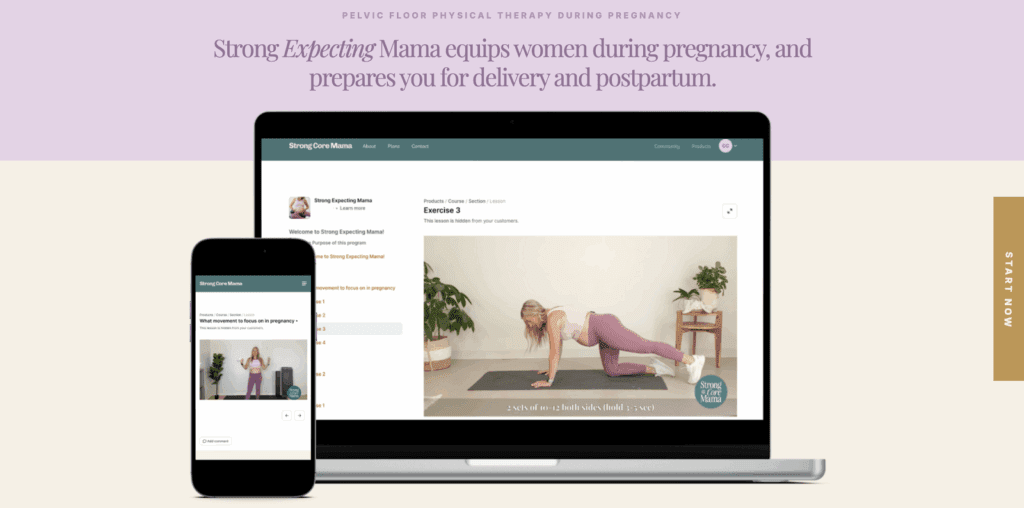
If you’re experiencing rib pain during pregnancy and want a comprehensive, evidence-based solution instead of a short-term fix, Strong Expecting Mama is the perfect program for you!
It helps you strengthen your core and pelvic floor in pregnancy to help with both labor and postpartum, and it’s FULL of exercises that’ll help you build strength, relieve pain, and feel confident & comfortable in your body as your baby grows.
You’ll also have access to a supportive group of like-minded pregnant mamas, and I’m there to answer any questions you might have about the exercises.
Learn more about Strong Expecting Mama and join!
